Your China & Yunnan Travel Experts



Popular Chinese Dishes are most useful as entry points into regional food, not a definitive national ranking. A first trip can combine roast duck in Beijing, dumplings in northern cities, Sichuan dishes in Chengdu and everyday noodles or rice wherever you travel. Start with the Chinese cuisine overview, then use the notes below to understand ingredients, names and serving styles.
Chinese name: 北京烤鸭
How to ask for it: Běijīng kǎoyā
Peking duck is closely associated with Beijing . Specialist restaurants roast the bird to create crisp skin and tender meat, then carve it near the table.
The usual accompaniments are thin pancakes, scallion or cucumber and a sweet bean-based sauce. Portions vary, so ask whether a whole or half duck suits the group.
Duck service can include additional courses made from the remaining meat or bones; confirm what is included when ordering.
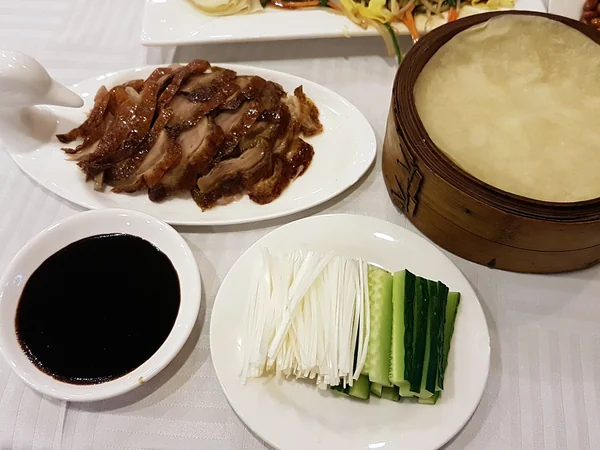
Carved Peking duck with pancakes and garnishes
Chinese name: 饺子
How to ask for them: Jiǎozi
Jiaozi are filled wheat-dough parcels served boiled, steamed or pan-fried. They are especially common in northern China and often connected with Lunar New Year family gatherings.
The festival link is explained in the regional Chinese New Year and Winter Solstice traditions, but dumplings are eaten throughout the year.
Common fillings combine pork, chive, cabbage, lamb, beef, egg or mushrooms. “Vegetable” does not always mean vegan, so confirm egg, stock and cooking oil.
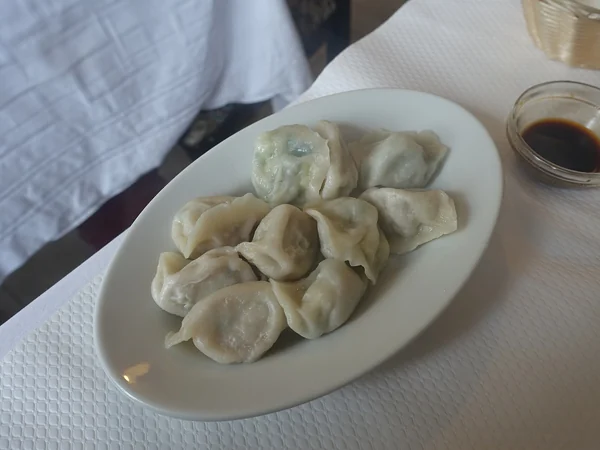
Boiled jiaozi with dipping sauce
Chinese name: 糖醋排骨
How to ask for them: Tángcù páigǔ
Sweet-and-sour spareribs balance sugar and vinegar around small pork-rib pieces. The dish appears in several regional traditions rather than belonging to one fixed origin story. Guangdong and lower-Yangtze versions may differ in sauce, color and garnish.
Recipes can use soy sauce, dark vinegar, sugar and aromatics; tomato sauce or fruit is not universal.
Hong Kong / Guangzhou versions may be sweeter or brighter than recipes from other regions. Because pieces contain bone and a glossy sauce, eat carefully and balance the dish with vegetables and a staple.
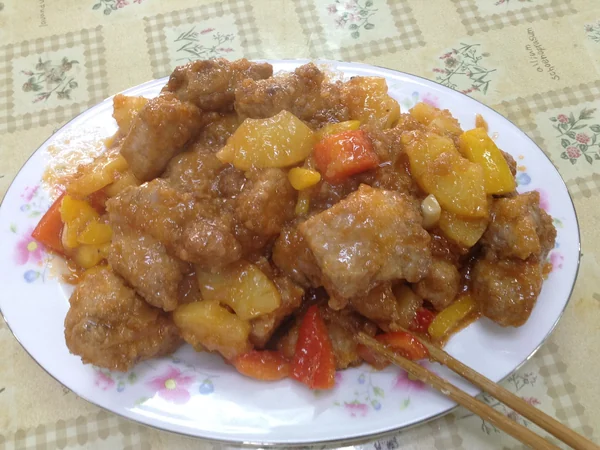
Sweet-and-sour pork ribs on a serving plate
Chinese name: 宫保鸡丁
How to ask for it: Gōngbǎo jīdīng
Kung pao chicken belongs to Sichuan cuisine and combines diced chicken, dried chili, peanuts and a sweet-sour-savory sauce. Sichuan versions emphasize dried chili and Sichuan pepper rather than simple heat. Overseas adaptations may add vegetables or a sweeter sauce. Peanut allergy makes the dish unsuitable even if visible nuts are removed.
Ask about spice level, but expect the core flavor and nuts to remain.
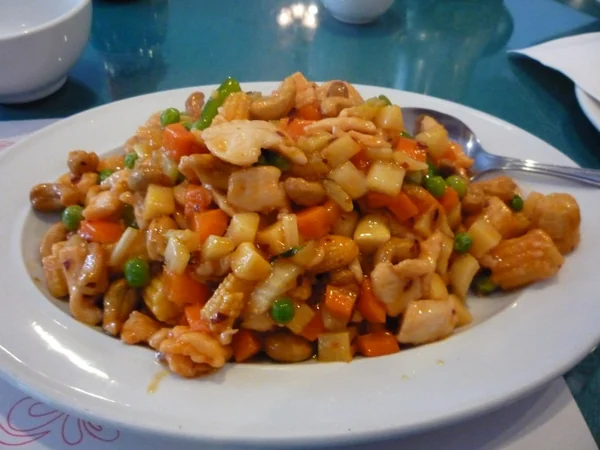
Kung pao chicken with dried chilies and peanuts
Chinese name: 春卷
How to ask for them: Chūnjuǎn
Spring rolls form a broad family of filled wrappers found across China and neighboring regions. Chinese New Year
associations are especially visible in parts of eastern and southern China, where their golden color can suggest prosperity. Fuzhou and Cantonese traditions use distinct fillings and wrappers.
Cantonese versions are not identical to eastern Chinese rolls. Fried rolls should arrive crisp and hot. Ask whether the filling contains pork, shrimp, egg or mushrooms.
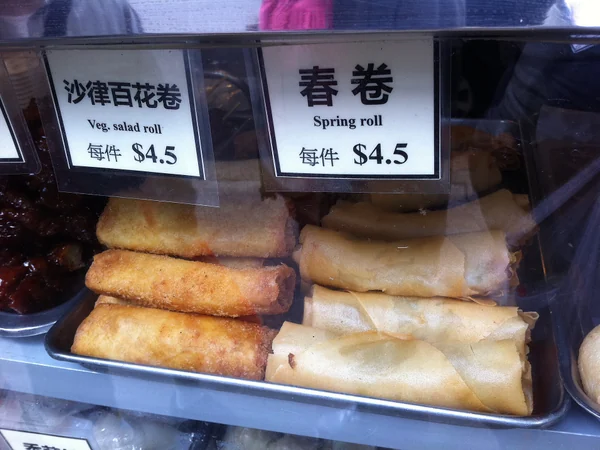
Crisp spring rolls cut open to show the filling
Chinese name: 火锅
How to ask for it: Huǒguō
Hot pot is a meal format: diners cook sliced meat, vegetables, tofu and noodles in simmering broth. Sichuan and Chongqing versions can be intensely aromatic and spicy; northern styles may foreground mutton and clear broth. Use separate utensils for raw and cooked food, cook ingredients thoroughly and confirm hidden allergens in the broth. See the gourmet cities guide to compare where different styles fit a route.
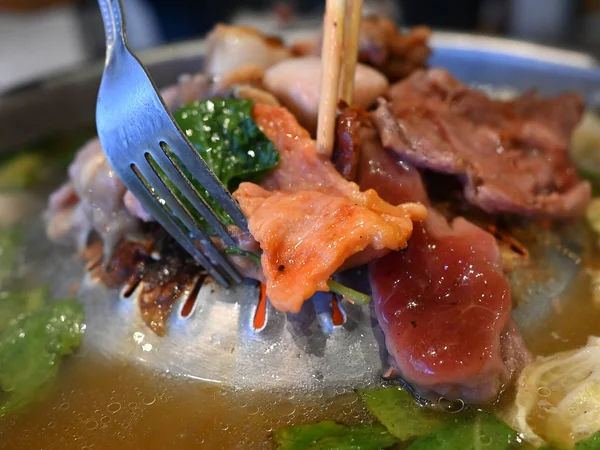
A divided hot-pot broth with ingredients for cooking
Chinese name: 蛋炒饭
How to ask for it: Dàn chǎofàn
Fried rice is an adaptable method rather than one national recipe. Rice is stir-fried with egg and may include scallion, vegetables, meat or seafood.
Relatively dry, cooled rice separates well in the wok, but restaurants use controlled preparation rather than relying casually on unsafe leftovers.
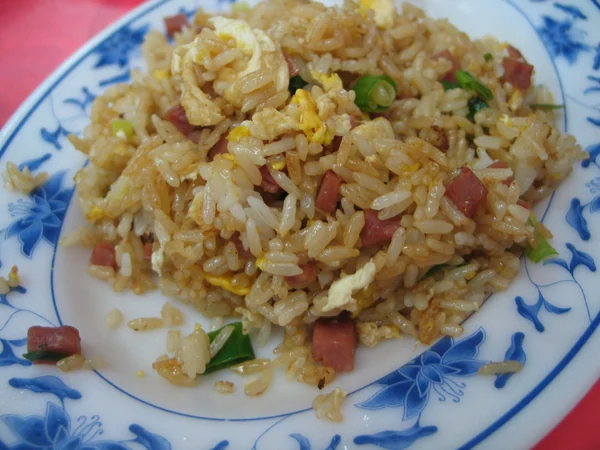
Egg fried rice with separated grains and scallion
Chinese name: 麻婆豆腐
How to ask for it: Mápó dòufu
Mapo tofu or mapo doufu is a classic of Sichuan cuisine and strongly associated with Chengdu . Soft tofu is cooked with chili-bean paste, fermented black beans and often minced meat. The name is linked with a nineteenth-century Chengdu restaurateur, though origin accounts vary.
Vegetarians must ask for no meat and no meat stock; simply removing visible mince is not enough.
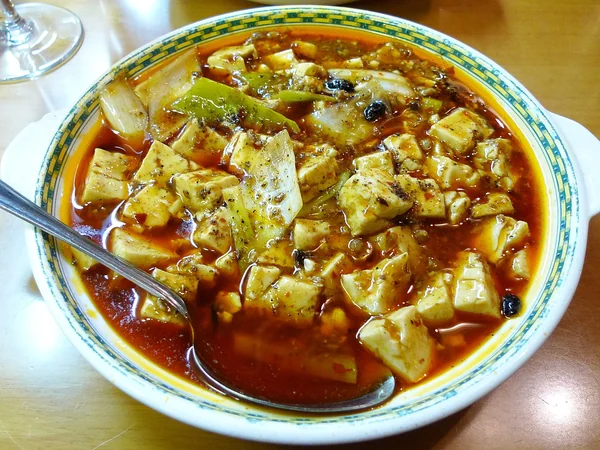
Mapo tofu in a red chili-bean sauce
Chinese name: 馄饨
How to ask for them: Húntun
Wontons are thin-wrapped dumplings commonly served in broth or chili oil. Regional names, folding and fillings vary. Chengdu red-oil wontons are different from the delicate soup wontons associated with Guangzhou and Hong Kong . Northern forms have their own histories and serving styles. Winter Solstice customs may include dumpling-like foods, but wontons are not restricted to the festival.
Ask whether the filling is pork, shrimp or mixed, and whether the broth contains shellfish.
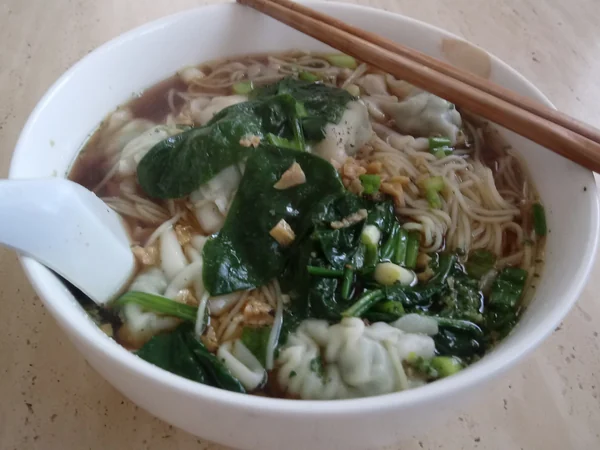
Wontons served in clear broth
Chinese name: 炒面
How to ask for it: Chǎomiàn
Chow mein literally points to stir-fried noodles, but noodle type, sauce and toppings change by city. Choose a version with vegetables and ask whether the noodles contain egg. A Shanghai night food walk can add neighborhood context.
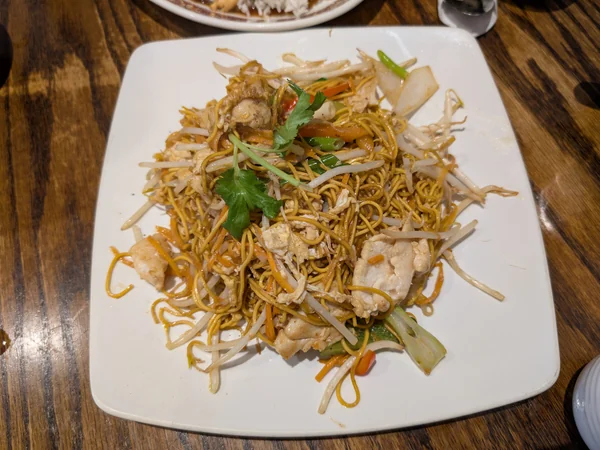
Stir-fried noodles with vegetables

Order several dishes with different techniques instead of ten famous foods at once.
Share portions, note allergies and leave room for a local staple.
Use regional names when available and let the restaurant explain its specialty.
Editorial accountability
Hu Lei, CEO. The named owner is responsible for travel-planning accuracy and escalation of time-sensitive checks.
Yuntian Travel (Yunnan) Group is identified in its corporate profile as a licensed professional inbound travel service provider based in Kunming, China. Registration and travel-service documents can be requested before booking.
Page-specific references where cited, official destination, transport and entry notices, YUNSKY route-planning records, and direct provider confirmation before a booking is finalized.
Content is reviewed when rules, transport, access, pricing or route conditions change. Final availability and operating details are reconfirmed for each traveler’s dates.
Quality review: Page updated: