Your China & Yunnan Travel Experts



Materials, Climate & Livelihood
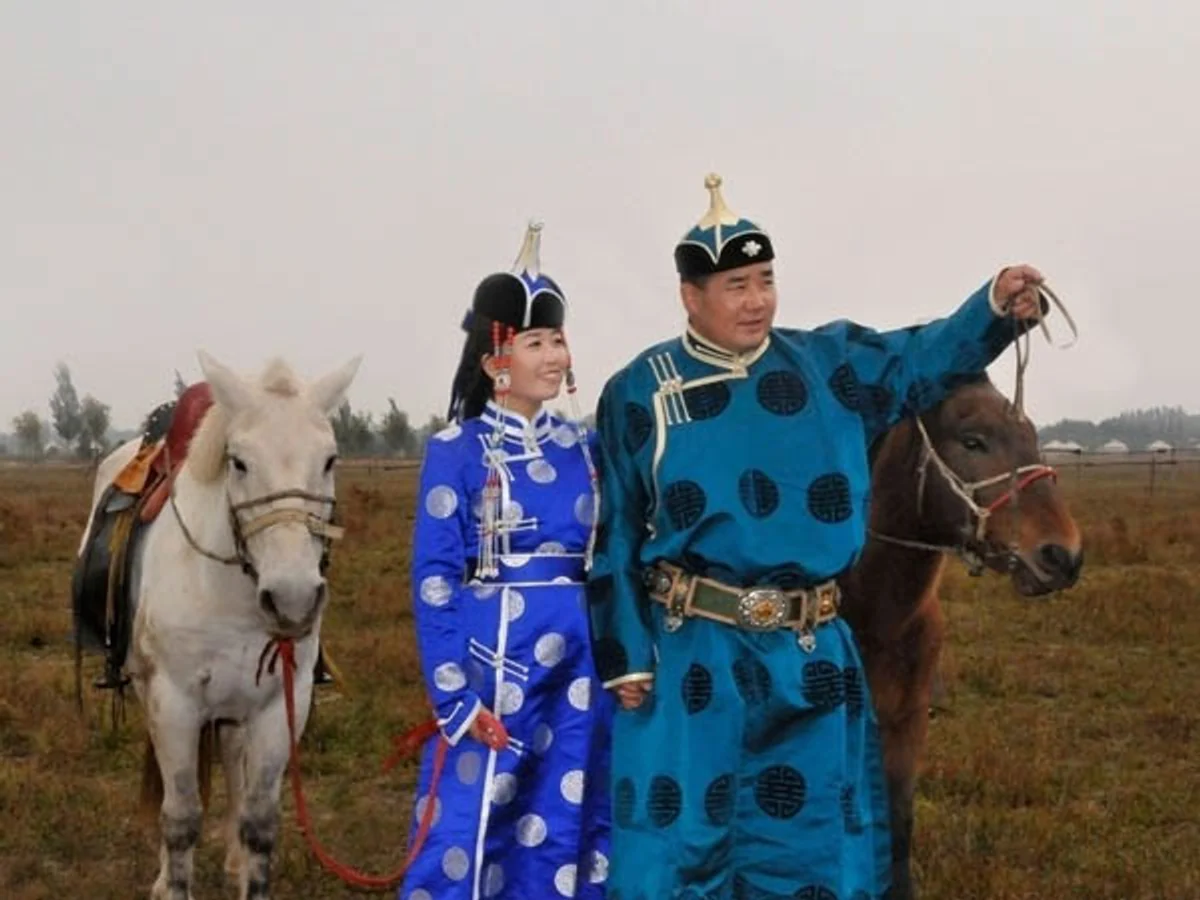
Mongol Garments: Name the Region and Occasion
Long robes often called deel in English-language contexts vary across Mongolian communities. Cut, sash, boots, headwear, fabric and decoration may signal locality or occasion, while modern daily clothing can look entirely different. A performance costume, wedding garment and herder's practical clothing should be labelled separately. Museum spelling and object provenance are more reliable than identifying a robe solely by a standing collar or bright trim.
Clothing Forms, Not a Fixed Two-Type System
Robes, jackets, trousers, skirts, aprons, vests and head coverings occur in many combinations. Dividing all clothing into only “long gowns” and “short clothes” hides construction differences and changing fashion. Instead, examine how a garment wraps or fastens, where it is seamed, whether it is layered, how movement is accommodated and which accessories complete the ensemble.
A tube skirt is a construction category, not evidence of one ethnic identity. Li, Dai, Jingpo, De'ang and other makers may use superficially similar forms with different fibres, weaving structures, motifs and wearing practices. Compare the front and back, selvages, waistband, repairs and signs of use. When a garment appears at the ethnic festivals described here, ask whether it was made for ritual, competition, tourism, a stage or daily life.
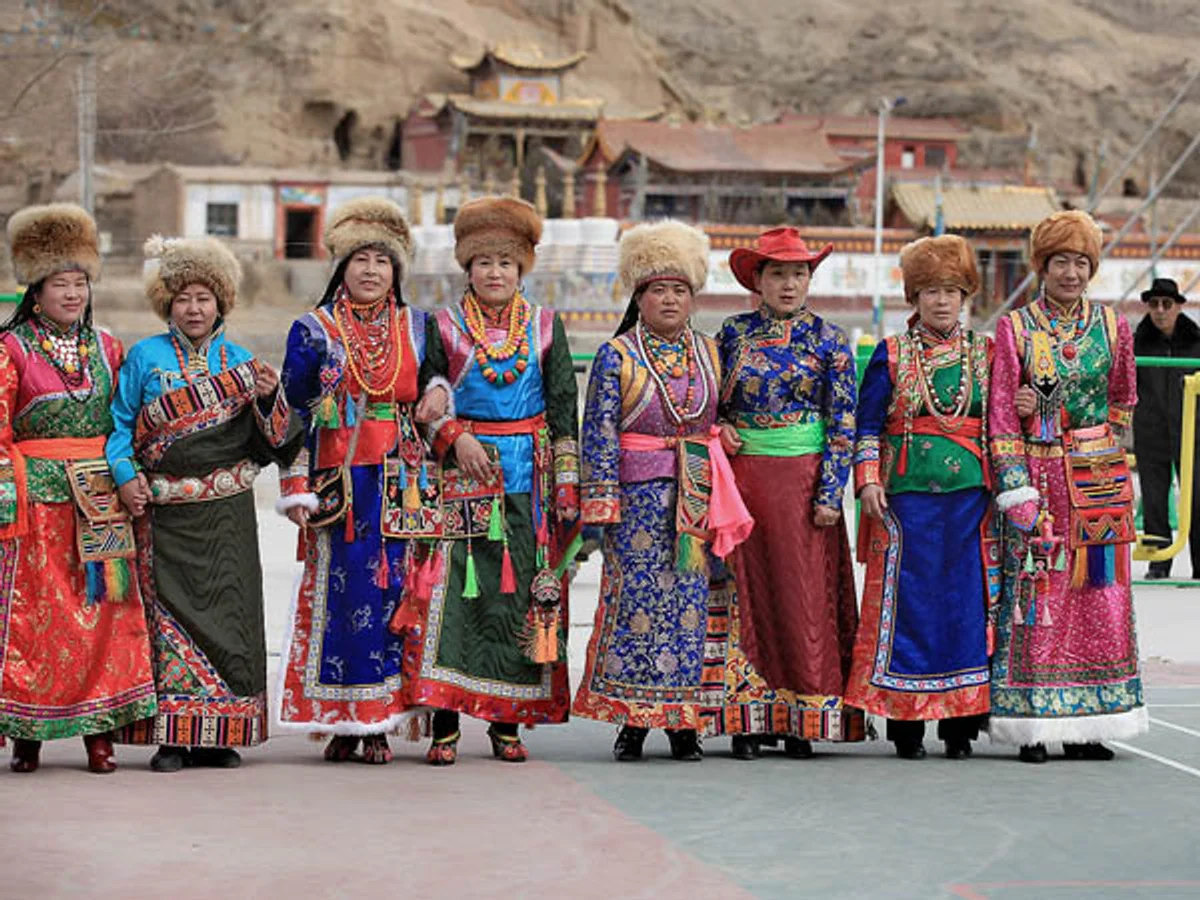
Tibetan Clothing: Plateau Diversity
The broad label “Tibetan costume” covers substantial variation across the Tibet Autonomous Region and Tibetan communities in Qinghai, Sichuan, Gansu and Yunnan. Climate, pastoral or agricultural work, monastery and lay contexts, urban fashion and local custom shape robes, aprons, boots, hats and jewellery. Even familiar objects such as striped aprons require a specific wearer and regional context; one photograph cannot stand for all Tibetans.
Variation can occur between neighbouring valleys and across life stages, and contemporary makers adapt inherited techniques to new fabrics and markets. Avoid older museum language that treats a community as timeless or ranks dress by supposed social “development.” Clothing records historical exchange, personal choice and ongoing change as well as local continuity.
Textile Techniques & Surface Design
Spinning, weaving, felting, tanning, dyeing, embroidery, appliqué, batik, braiding and metalwork can all contribute to an ensemble. The technique should be identified from construction evidence or a knowledgeable source. A printed imitation of embroidery and a hand-worked panel may look similar online but carry different labour, care needs and cultural value.
Embroidery may strengthen edges and high-wear areas while adding geometric, plant, animal or auspicious motifs. Meaning is not automatic: the same shape can be interpreted differently by makers, collectors and tourism marketing. Attribute symbolic readings to a named community, maker or catalogue, and record stitch, ground fabric, thread and repair before proposing a date.
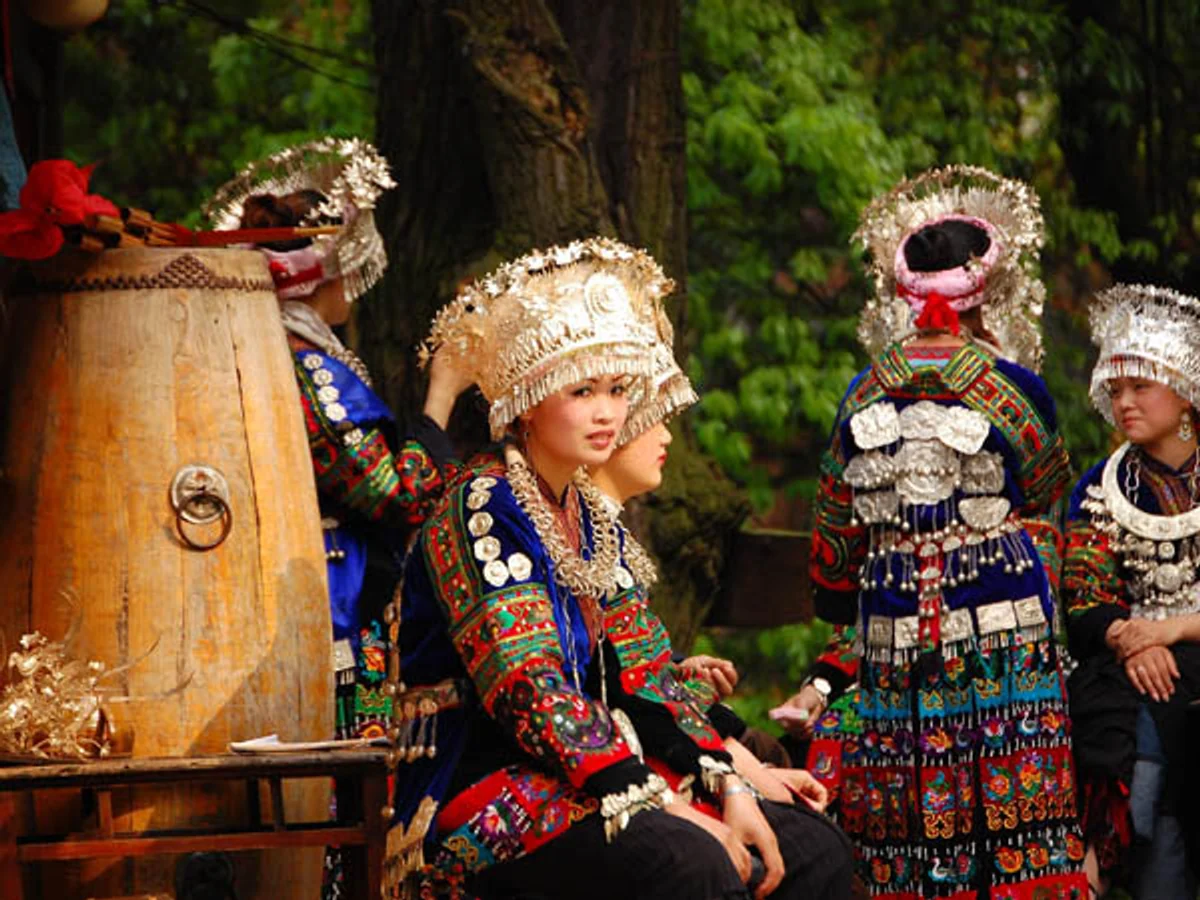
Yao Clothing: Community-Level Identification. “Yao costume” is another umbrella term: different Yao communities use distinct clothing names, headwear, embroidery and colour systems, and the wearer's age or ceremonial role can matter. A responsible caption gives the locality and event instead of treating the most elaborate photographed outfit as universal everyday wear.
Silver, Beads & Other Adornment
Silver ornaments are strongly associated with some Miao, Dong, Yao and other traditions, but material, weight and use must be verified object by object. Headdresses, neck rings, earrings, bracelets, buttons and pendants may be inherited, commissioned, rented or made for performance. “Heavy silver” is not a quality test, and colour alone cannot distinguish sterling silver from alloy or plated metal. For broader chronological comparison, see Chinese clothing history from Han and Tang evidence to the qipao. Ask permission before photographing a wearer, credit living makers and never detach ornaments from an ensemble simply to increase resale value.
Editorial accountability
Hu Lei, CEO. The named owner is responsible for travel-planning accuracy and escalation of time-sensitive checks.
Yuntian Travel (Yunnan) Group is identified in its corporate profile as a licensed professional inbound travel service provider based in Kunming, China. Registration and travel-service documents can be requested before booking.
Page-specific references where cited, official destination, transport and entry notices, YUNSKY route-planning records, and direct provider confirmation before a booking is finalized.
Content is reviewed when rules, transport, access, pricing or route conditions change. Final availability and operating details are reconfirmed for each traveler’s dates.
Quality review: Page updated: